
The Best Maui Whale Watching Tours
How To Choose the Best Maui Whale Watching Tours for Your Maui Vacation
In my humble opinion, a whale watching tour is the #1 activity I would recommend to visitors to Maui during the winter months.
The best Maui whale watching tours are those that are conscious of whales’ natural habitat and offer a stunning up-close experience to offer a glimpse of these amazing animals in their natural habitat.
I have been lucky enough to visit Maui three times over the years. Each visit was about a week in length, leaving plenty of time to explore the island and have more relaxing beach days. There are four things I recommend visitors schedule time for in their first visit. Today, I will discuss the first recommendation, which is a Maui whale watching tour.
I have been on both a large catamaran tour and a small raft tour, and they both offer stunning viewing opportunities from the west side of Maui in the Kaanapali area.
What to Know
Experiencing a Maui whale watching tour is unforgettable and a perfect way to connect with nature. The Pacific Ocean is teeming with humpback whales during the winter months. They travel from Alaska when the weather cools, and their food supply diminishes. During this time, they breed and give birth to their calves. The water surrounding Maui is extremely shallow, protecting whales from predators.
After giving birth, the whales teach their calves to breach. You may remember from school that whales are mammals, and their calves stay with their mothers for up to a year. So, after the whales give birth in Maui waters, they spend the rest of the winter months frolicking and teaching their calves to breach. Consider a Maui whale watching tour for an up-close look at these amazing animals.
Humpback Whales’ Natural Habitat
The Hawaiian Islands, particularly the waters surrounding Maui, serve as a crucial natural habitat for humpback whales during the winter months. From December to May, these majestic creatures migrate approximately 3,000 miles from their feeding grounds in Alaska to the warm, shallow waters of Hawaii. This journey is crucial to their ability to mate, give birth, and nurse their young in a protected environment.
The shallow depths (typically less than 600 feet) offer protection from predators and create a safe space for mothers to care for their newborn calves. During this time, visitors can witness a range of fascinating behaviors, including breaching (jumping out of the water), tail slapping, and pec slapping, which are believed to be forms of communication, play, and displays of physical fitness. Male humpbacks also engage in competitive behaviors as they vie for the attention of females. The singing of male humpbacks can often be heard underwater during this season.
Raft Tour or Catamaran Tour? How to Choose?
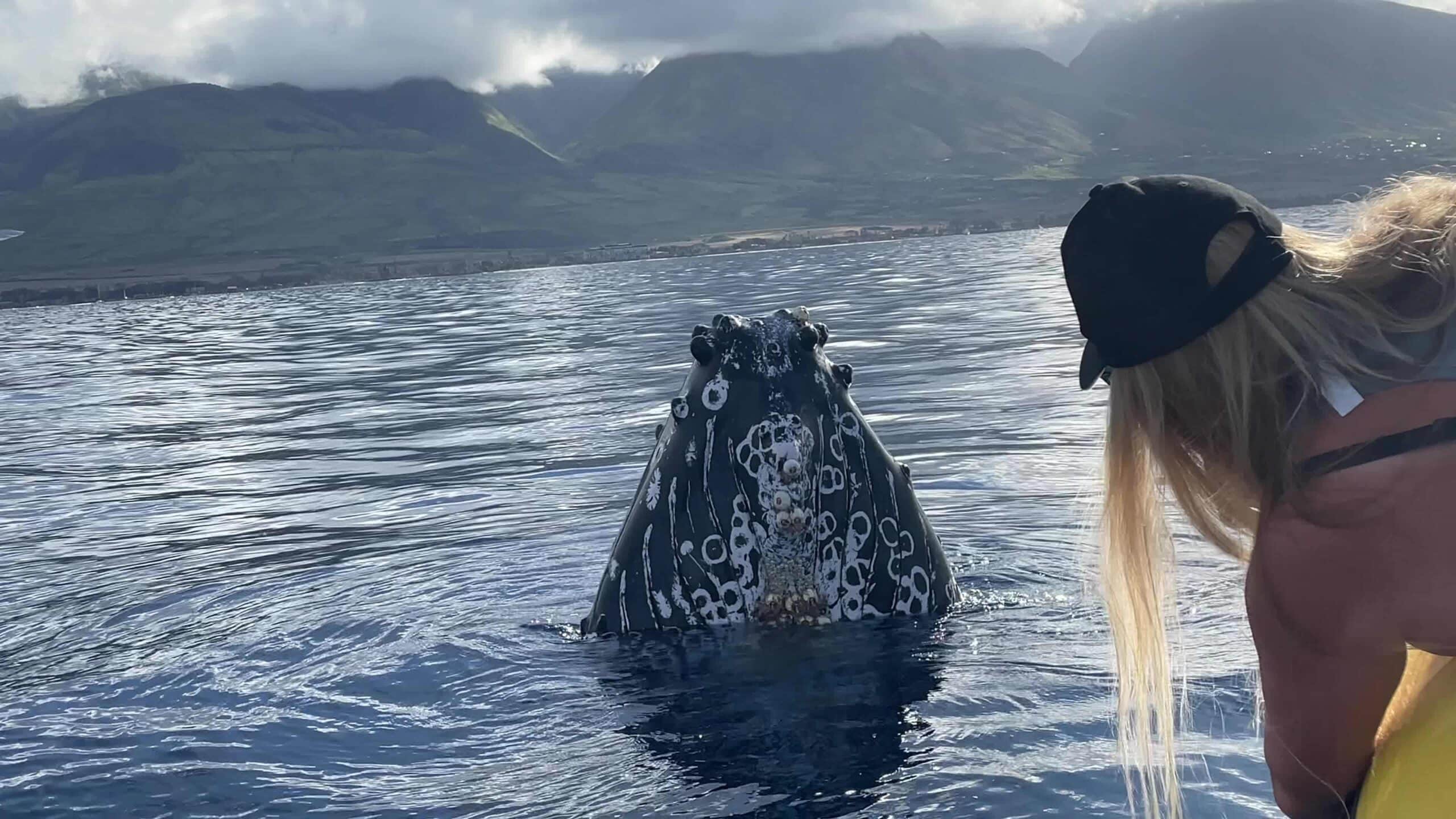
I have been on both a catamaran whale watching cruise and a raft tour. There are a number of factors that influence the decision on which whale watch tour to choose. The catamaran tours can pick you up right on Kaanapali Beach, which is convenient if you are staying there. The raft tours’ pickup locations vary depending on conditions. They will either pick you up on the beach or you will drive and meet in Lahaina. You may find out the night before, so flexibility is important. A catamaran tour will be on a bigger boat. There is often a capacity of about 40-45 guests on these tours. The whale watching raft tour is going to be much smaller. The larger catamaran is also more stable on the water. If there are concerns about mobility or seasickness, a catamaran is the tour to choose. The ocean raft is a much smaller vessel. I found that the whales were very curious about our raft. They would swim up to us, under us, and pop their heads out of the water and inspect us. I did not find the same to be true on the catamaran. Either way, you are going to have a great time on your whale watch. It all depends on your needs and how up-close and personal you want to get to these creatures.
What is the best month to see whales in Maui?
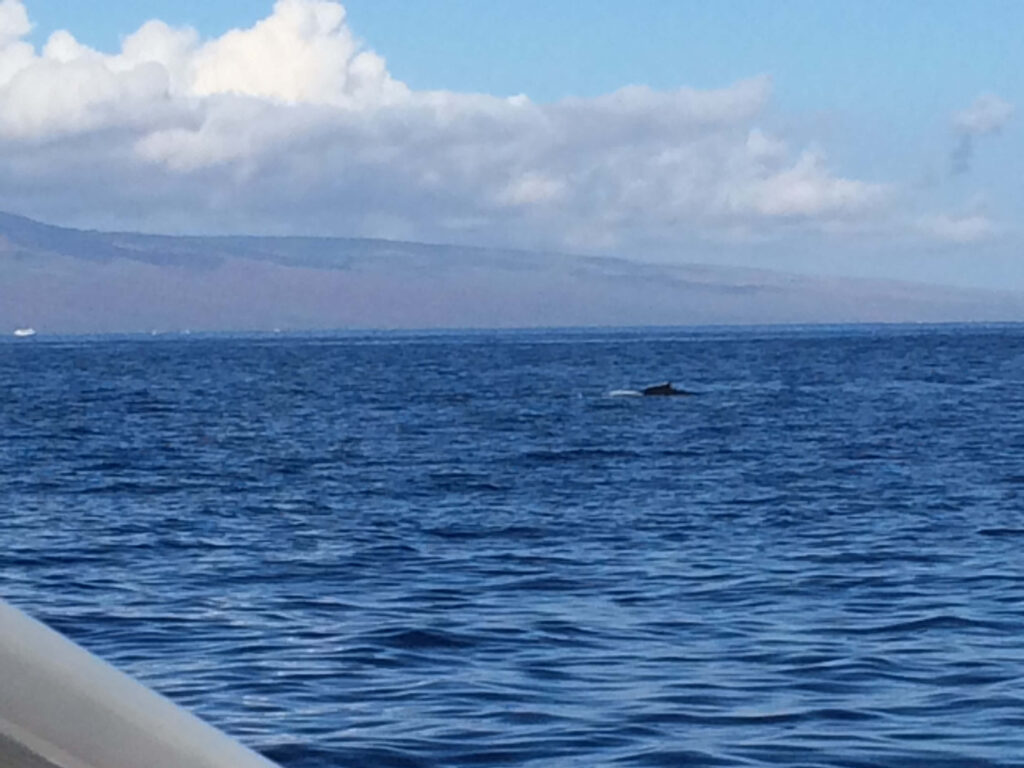
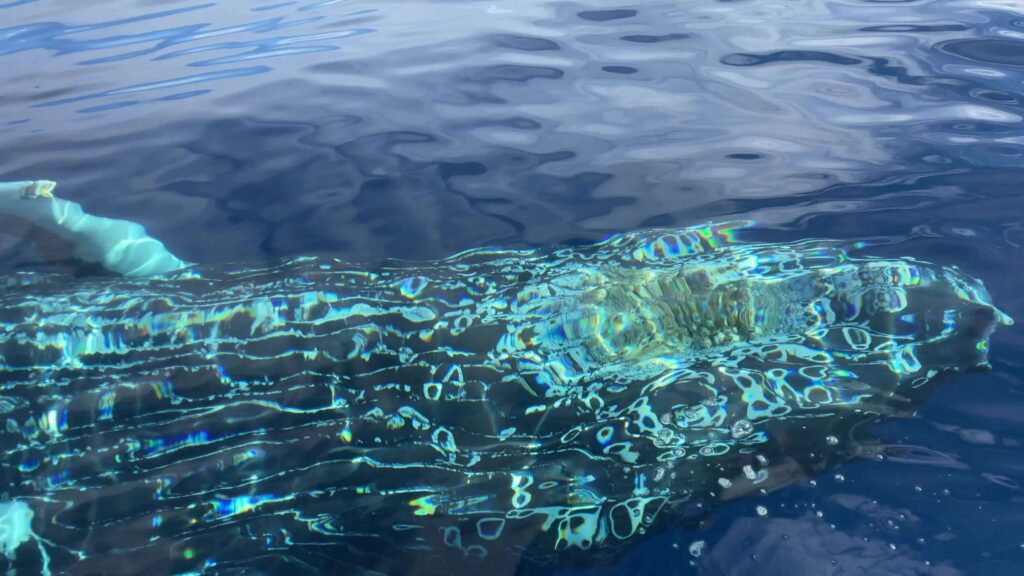
We went on an early morning raft tour, which departed from the Lahaina Harbor. The best times to schedule a whale watch are from December to April, but whales can be seen in Hawaiian waters as early as November. The best location to see whales is the west side of Maui, as this is a protected area for them. These waters are consistently calm and less windy than other Hawaiian Islands, resulting in frequent humpback whale activity. You can even see whales jumping out of the water from the beach or a lanai. For a better experience, consider booking a whale watch—you will not be disappointed!
What is the best time to go whale watching in Maui?
We booked an early morning tour, which departed from the Lahaina Harbor at 7 am. I had researched in advance and read that early morning tours often offer calmer waters and better visibility. I found that to be true as the boat was gently rocking in the ocean. I was also worried about seasickness (which no one experienced), but just to be on the safe side, I thought that drinking a cup of coffee and waiting to eat breakfast later was a safe choice.
Alternatively, sunset tours will also be beautiful with the sun setting on the west side of Maui over the ocean. I think the least desirable tour would be during the middle of the day when the sun is strongest, so keep that in mind when booking and carry plenty of sunblock and a hat. Weather conditions can also affect visibility, and there is always a chance your tour will be cancelled in a heavy storm. If that is the case, consider booking early in your stay in the odd chance that could happen, you will have some flexibility to re-book.
Whales seem to be active from morning to evening, so there is no hard and fast rule as to when to go. If you are staying on the west side of Maui, you will likely see them from the beach anytime from the early morning until sunset. It really depends on when you want to go. If you want to maximize your time shopping or swimming, the best choices, as highlighted above, are to have this tour anchor your day either as the first or last activity.
What tour to choose for a close encounter
For the best Maui whale watching tours, look into local companies that prioritize safety and sustainability.
There are several factors to consider when selecting a tour. Is anyone in your group prone to seasickness? Is anyone elderly or with reduced mobility? If you answered yes to either of these questions, I would recommend going on a bigger boat or catamaran. But you should know that you will be with many more people and will not have an up-close and personal experience.
Many tours are operating from Lahaina Harbor. Some will pick you up right on Kaanapali Beach (weather permitting). Our tour was scheduled to pick us up from the beach, but the location changed at the last minute, and we drove to Maalaea Harbor, where many of the tours leave on Maui. This should not be a problem, as you will probably have a rental car during your stay.
What side of Maui is best for whale watching?
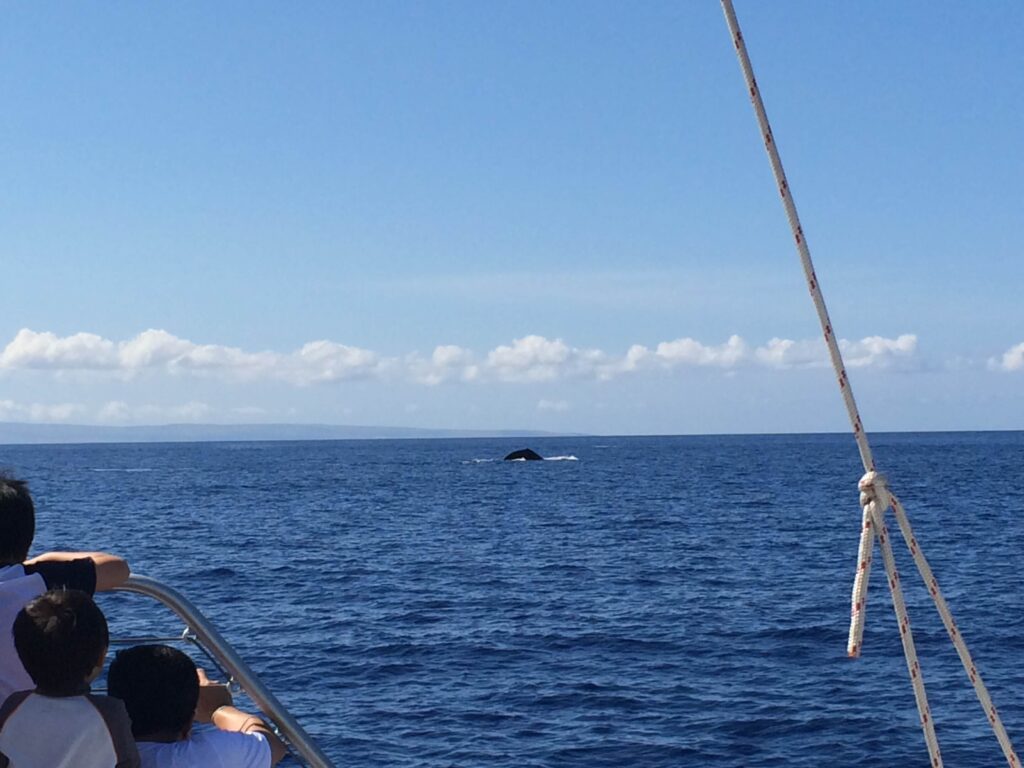
The west side of Maui is widely considered the best for whale watching. This area, particularly off the coast of Lahaina and Kaanapali, offers ideal conditions for humpback whales. The waters here are calmer and more protected, creating a perfect environment for whales to breed, give birth, and nurse their calves. The Auau Channel between Maui, Lanai, and Molokai is especially popular among these majestic creatures. The shallow, warm waters provide excellent visibility for observers, and the mountainous backdrop of West Maui creates a stunning setting for whale watching.
While whales can be spotted from various locations around the island, the west side consistently offers the highest chances of multiple sightings and spectacular displays of whale behavior. Many of these tours offer guaranteed sightings during prime whale watching months.
My recommendation
We chose Ultimate Whale Watch & Snorkel https://www.ultimatewhalewatch.com for our raft tour. I highly recommend this small business. They offer whale watching during the winter months and snorkel tours during the summer months. We visited in March, which is the tail end of whale watching season. Even so, we saw so many whales that day that I lost count. I am not exaggerating when I say it was one of the best days of my life!
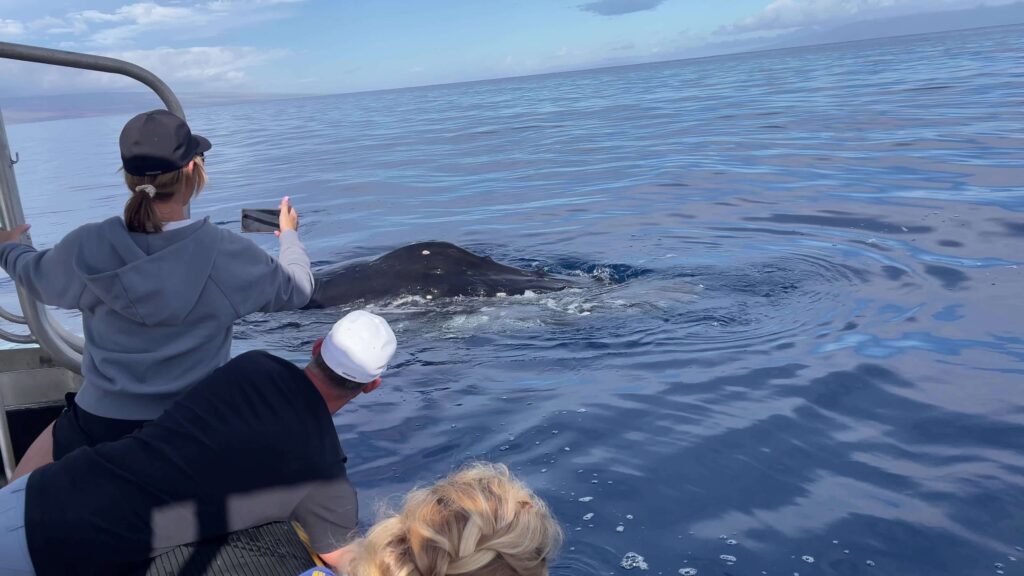
We chose the 2-hour VIP tour, which is $110 per person. These tours take place in small inflatable rafts. You are so close to the water that you can put your hands and feet in it. There is only space for 12 people. So, no matter what side of the boat you are on, you are going to get to see whales! They say “every seat is a front row seat,” and that is so true. You will have a dedicated seat on one side of the boat. There were many encounters where the whales were right in front of us. At other times, the whales will be on the other side of the boat, and you are able to stand up and see the activity. This small group atmosphere allowed for a more intimate experience.
In comparison, a two-hour catamaran tour is around the same price and may offer beverages. I cannot remember which catamaran company I toured with, but I think you will have a similar experience on any of them. It is best to check out reviews in advance on a site like Viator: https://www.viator.com.
If you are visiting in the summer, don’t worry. There are snorkel tours during the summer months. In the summer, there are dolphins, sea turtles, and various fish that snorkelers have close encounters with off the coast of Maui and Lanai.
What makes the raft tour so special
In our small group, there was a captain and a first mate. They were both well-educated in whale behavior and offered insights into what we were experiencing. There was also a hydrophone that could be used to listen to the whales singing underwater. Whales are protected in Maui waters, and the team ensures that they follow the law. There were even times when they cut the motor because whales swam within 100 yards of us. At the very end of our tour, we were “stuck” there because whales kept coming up to our boat, and by law, we could not start the motor and leave. I don’t think anyone on the tour minded, though.
The small raft tour meant we regularly had close encounters with whales. They swam under our boat, and they breached right next to us. They looked at us watching them. We were encouraged to tap on the side of the raft. These curious creatures will swim up to you to investigate. As a result, we had a tour that lasted over 2 hours, and I lost count of all the whales we saw up close.

What to bring
📸 Camera or 📹: I made the mistake of bringing a heavy DSLR camera. I thought it would be better for the zoom and the quick shutter speed. However, I ended up putting it away. I kept missing the shots, and the whales were SO CLOSE to us that I didn’t need the zoom. I ended up using my iPhone 12 and got the best pictures and videos with it.
🤳 Go Pro: I wish I knew about this in advance. You can bring a GoPro with a long selfie stick and put it in the water. The tour guides were doing this themselves. I am sure they get amazing footage of underwater shots, and I would bring one if I go again in the future.
🧢 Hat and sunscreen: There will be some coverage, but this is Maui, and the sun is strong. You probably are not used to the tropical sunrays. Don’t ruin your vacation with a bad sunburn!
Pro Tip!
Bring a GoPro with a long selfie stick to get amazing over and underwater shots and leave the clunky cameras at home. I found that I did not need my large heavy DSLR with a zoom lens and ended up putting it away and using my phone camera and video instead. Next time, I will be taking my GoPro!
What else to know
I booked 2-3 weeks in advance. There were some sold-out tours, but as long as you are flexible and don’t need to go out on a certain day, you will be fine.
If you are worried about getting seasick, book an early morning tour. We went out on the 7 am tour. We had a cup of coffee and drove to the harbor. After the tour was over, we had breakfast. I did not feel sick at all, but I was a little worried about it, and I am glad I went on an empty stomach. It is also warm and sunny early in the morning, so we had great weather.
If you are staying in Kaanapali, they will pick you up on the beach, or you will have to drive to Lahaina Harbor. It is a short 10-minute drive, and there is plenty of parking.
Lahaina Strong
The community of Lahaina suffered a devastating fire in 2023. They are still healing. Many areas in Lahaina are still closed, and there is still damage. There were photos of the victims along the road. This was a traumatic event for those who live on Maui and those who knew someone who died or lost their home. I don’t think it is realistic to expect people to stop visiting such a beautiful place. However, I believe in being a responsible tourist and a respectful person.
Many people who live on Maui will not want to talk about the fires, and it’s important to respect that. Lastly, consider donating to the Maui United Way https://www.mauiunitedway.org/ or another organization. They are helping residents rebuild after that devastating fire. I donated online, which is secure and easy. There were also some people selling “Lahaina Strong” shirts to support the victims. People in Hawaii are so friendly and share the aloha spirit with all of us. The least we can do is to help out in any way we can to rebuild this beautiful historic town for future generations.
Conclusion
Embarking on a whale watching tour in Maui is truly a once-in-a-lifetime experience that should not be missed. It is my #1 recommendation if you are visiting anytime from December to April. Whether you choose a larger, more stable vessel or opt for an intimate raft tour, the key is to plan ahead and select a tour that suits your preferences and physical abilities. Early morning tours often provide calmer waters and excellent visibility, while sunset tours offer breathtaking sunset views.
Remember to bring essentials like sunscreen, a hat, and a camera or smartphone to capture these unforgettable moments. As you plan your Maui whale watching adventure, keep in mind the importance of responsible tourism. Choose eco-friendly tour operators who prioritize the well-being of the whales and their environment. And while enjoying the beauty of Maui, remember the recent challenges faced by the Lahaina community and consider ways to support their recovery efforts. For more information on what to do in Maui, check out Your Ultimate Maui 5 day itinerary, Road to Hana Guide, and The Best Things to do in Maui Hawaii.
Important Note!
We recognize the use of diacritical markings of the (modern) Hawaiian language including the ʻokina [ʻ] or glottal stop and the kahakō [ō] or macron (e.g., in place names of Hawaiʻi such as Lānaʻi). However, you may notice these diacritical markings have been omitted on some parts of this website to ensure the best online experience for our visitors. We recognize the importance of using these markings to preserve the language and culture of Hawaii and respectfully use them in all communications beyond this website.
One Comment
Comments are closed.